
Start your engines
The Formula 1® World Championship returns to Melbourne as the season opener for 2026 and while the start of any new campaign inevitably brings debate, discussion and renewed hope for every team, this year’s kick-off carries more intrigue than most. A sweeping suite of rule changes threatens to throw last season’s form book firmly out of the cockpit.
Only 89 days will have passed since Lando Norris was crowned World Champion for 2025; a reflection of just how elongated the modern F1 calendar has become. Echoes of debate around Max Verstappen’s late-season surge and McLaren’s contentious refusal to nominate a clear number one driver still linger, but they are already being drowned out by conjecture and excitement ahead of the next high-speed global jamboree.
The Formula 1® Qatar Airways Australian Grand Prix has long been the sport’s curtain-raiser of choice - a fast, temporary circuit wrapped around a public park, backed by vast crowds and an atmosphere that feels as much festival as race meeting.
That is amplified when Australians have something to cheer, and in Oscar Piastri they have exactly that. Add to it a lingering sense of injustice that Englishman Norris was favoured over him at McLaren last year and you have a crowd primed for noise. They’ve even named a grandstand after him for this year’s event.
While Piastri will draw plenty of attention, most eyes will be fixed on the biggest regulation reset in a generation — one that has left even the sport’s most successful drivers stepping into the unknown.
Four-time World Champion Max Verstappen summed it up succinctly: “It’s a very big change with the engine, the dimensions of the car have changed. For the drivers, it will take a bit of time to adjust and that’s why it’s very important during the test days that we are getting our laps in.”
Seven-time World Champion Lewis Hamilton was even more direct: “The 2026 season represents a huge challenge for everyone, probably the biggest regulation change I have experienced in my career.”
The Long and Short of It
Formula 1’s 2026 regulations represent a radical rethink rather than an evolution. Cars are significantly smaller and lighter, reversing a decade-long drift towards ever-bigger machines. Wheelbases have been shortened, minimum weights reduced and wings simplified.
The objective is clear: cars that are more agile and more responsive.
Aerodynamics have been simplified and rebalanced. Ground effect remains, but with reduced reliance on the complex floor designs that have made following another car so difficult. Active aerodynamics arrive for the first time, allowing teams to adjust front and rear wing configurations on the fly - prioritising either low drag or high downforce depending on the phase of the lap. The aim is closer racing, a levelling of the competitive field and more overtaking.
But the biggest change sits under the engine cover.
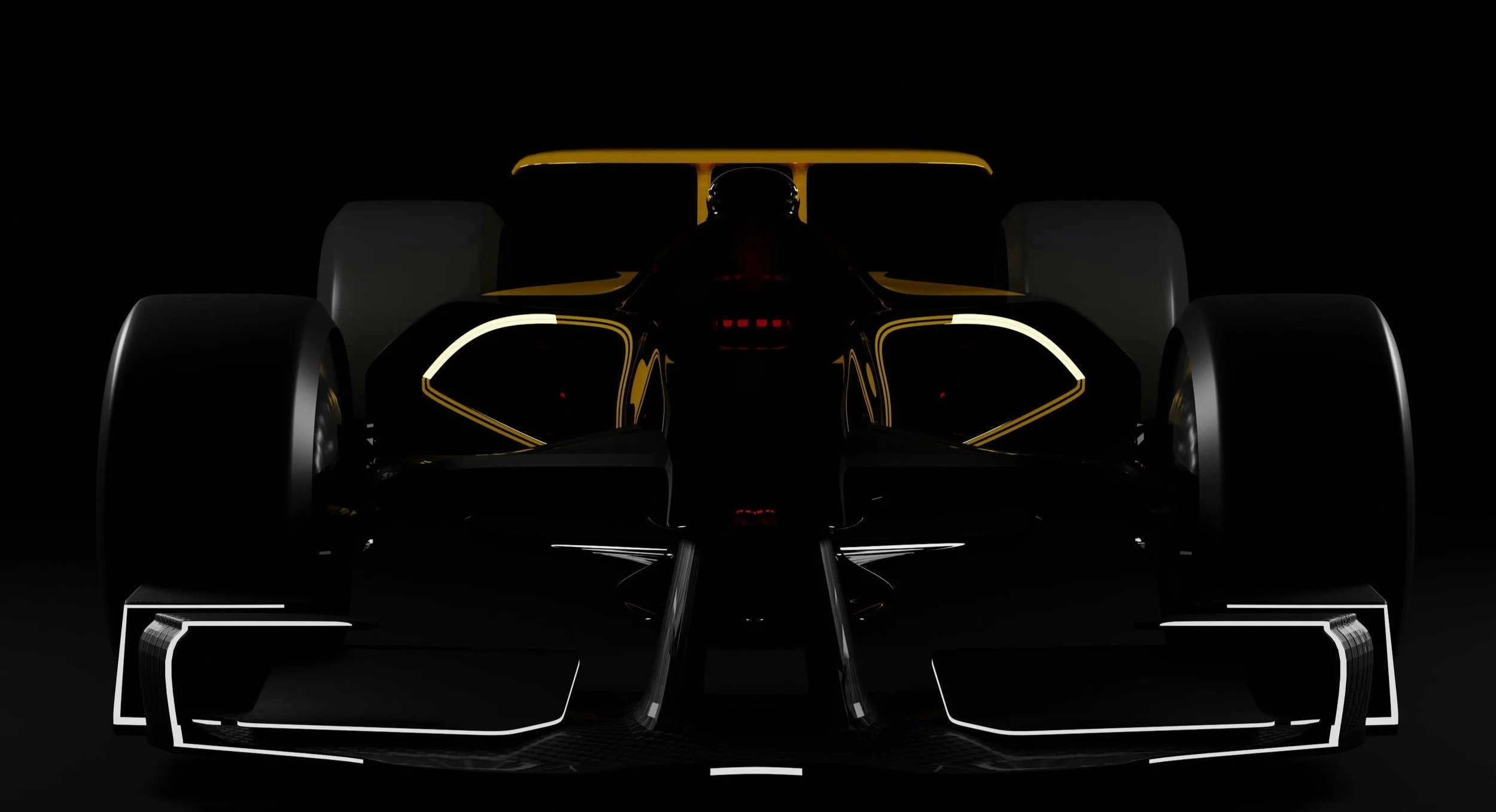
Photo by Aman Pal on Unsplash
The Balance of Power
The 2026 power units are radically different. The core remains a 1.6-litre V6 turbo hybrid, but electrical power now provides 50 per cent of output - a major increase from previous iterations. The Energy Recovery Unit (ERU) can harvest more energy, replacing the much-maligned MGU-H.
Sustainable fuels are now mandatory, aligning the sport more closely with broader automotive realities. Energy deployment is also more aggressive, with drivers managing power modes not just across laps, but corner by corner — turning energy use into a strategic weapon rather than background noise.
There is another major engine storyline this season that has nothing to do with regulation and everything to do with responsibility. Red Bull, whose eight Drivers’ Championships and six Constructors’ titles were achieved with engines supplied by Renault and Honda, now build their own for the first time in partnership with Ford.
And that caused drama before testing even began.
In a sport where controversy is never far away, the scale of change has sparked concern. When two teams missed their first opportunity to test new power units in Barcelona at the end of January, rumours quickly followed. Debate centred on how Red Bull and Mercedes — who also supply engines to defending champions McLaren, as well as Williams and Alpine — had interpreted the new rules.
According to reports, Ferrari, Audi and Honda were sufficiently concerned to approach the sport’s governing body for clarification, amid fears of a two-tier competition emerging before a lap had even been completed.
New Faces, Familiar Names
Mention of Audi brings us to another source of intrigue, with two automotive heavyweights joining the grid in 2026.
Audi arrives as a full factory team, taking over the Sauber operation and bringing decades of endurance racing and motorsport engineering pedigree. Its commitment is long-term and serious, with a power unit programme developed specifically for the new rules. The question isn’t whether Audi will be competitive — it’s how quickly.
Joining them is Cadillac, backed by General Motors and representing another step in Formula 1’s rapid expansion in the United States, which now hosts three rounds of the championship. Cadillac’s entry has been closely scrutinised and heavily negotiated. Expectations may be modest, but history suggests US manufacturers rarely do things by halves.
Who Dares, Wins?
On one hand, making predictions after such wholesale change is a mug’s game. On the other, recent results — combined with rivals already whispering about engine deficits — suggest another scrap between Red Bull and McLaren is far from unlikely.
More specifically, it points to a renewed battle between last season’s top three drivers: Norris, Verstappen and Piastri. Yet a glance at the bookmakers complicates the picture, with Mercedes’ George Russell installed as outright favourite by some.
Melbourne will offer only a glimpse of what lies ahead. But it’s worth remembering that last year’s glimpse proved telling — Verstappen’s runner-up finish to Norris at Albert Park was mirrored in the final standings 23 races later. For now, the smartest move is to sit back and enjoy the action — and the uncertainty.
We know we will.