
Fake News!
On 19 February, 2025, authorities in Italy uncovered a forgery operation and confiscated 70 fraudulent works of art attributed to the likes of Picasso and Rembrandt*. In the art world this was just a drop in the ocean. In his book False Impressions: The Hunt for Big Time Art Fakes, former Director of the Metropolitan Museum of Art estimated that 40% of the works he examined during his tenure were fake.
Meanwhile in China in January 2024, authorities raided an illegal factory churning out fake wine by the thousands of bottles by filling them with cheap bulk white wine and adding counterfeit labels and caps**. Australian Wine and Whisky Fraud / Authentication expert Scott Evers estimates that 20% of all wine and 30% of all whisky is counterfeit.
Over to France and in 2022 a raid by customs seized enough fake Louis Vuitton fabric to cover 54 tennis courts. Some estimates suggest that 10% of all branded goods sold may be counterfeit.***
We could go on, dipping in to the world of signed memorabilia, clothing and even aircraft parts (scarily, you read that correctly.) The Organisation for Economic Co-operation and Development (OECD) estimates that the trade in counterfeit goods could reach USD1.89 trillion by 2030, while the International Chamber of Commerce has the number much higher; already suggesting it’s USD4.2 trillion by 2023.
Given the size of the problem, provenance becomes a global challenge and opportunity. But the challenge for any industry wanting to attack the issue is that there are few universal solutions, and the industry specific ones tend to involve a high level of expert knowledge, explaining why the role of ‘authentication expert’ exists in the first place.
As Evers references, for wine it involves: “Lighting, magnification, measuring, cutting, cleaning, photography, and a deep knowledge of wine, producers, packaging, technologies/changes, classification systems, food and beverage laws in respective countries, forensic techniques etc”. The fact he had to train for years sums up the issue.
Certificates of authenticity have traditionally played a role in provenance, depending on the industry involved. But in the modern world, these are relatively straightforward to copy anyway. More technical solutions have been offered up such as digital watermarks, microdots, QR codes or smart labels. These have offered varying levels of success but no universal adoption. Holograms or QR codes are easily copied and have high error rates, which integrated solutions like RFID or NFC chips have short lifespans and are hackable.
So where does the answer lie for this multi-trillion-dollar problem? One solution may lie by looking to courts of law, where provenance is clearly critical; in particular when it comes to identifying people accused of crimes. Since the 1980s, DNA profiling has been used in criminal cases to identify people. What if ‘things’ could have their own DNA? It may sound far-fetched, but a recent craze indicated how this might be possible.
Remember NFTs? For about five minutes there, they were big news and the latest darling of speculative investors. NFT stands for non-fungible token and is a unique digital identifier used to certify ownership and authenticity. NFT trading in 2020 was worth USD82 million. By 2021 it was USD17 billion. In 2022 the market collapsed. A simplistic view of the craze would say that while NFT might have solved the problem of authenticity, they weren’t attached to anything of any value.
Who wants to ‘own’ a piece of digital art that anyone can view or copy? But what if you could take the authenticity benefits of NFTs and apply them to physical objects? That’s what one US-based company is working on to create a verifiable world whereby physical objects can have immutable identity with molecular NFTs based on synthetic DNA. Or, as its Australian arm Indelible calls it: DNA for things.
If that last paragraph made as much sense as some of the highbrow art that it intends to protect, let us explain a bit further. It is possible to create molecules of synthetic DNA that contain data that is unique to that molecule. The molecules can then be added to physical objects, either by coating the object or even inserting them into the object.
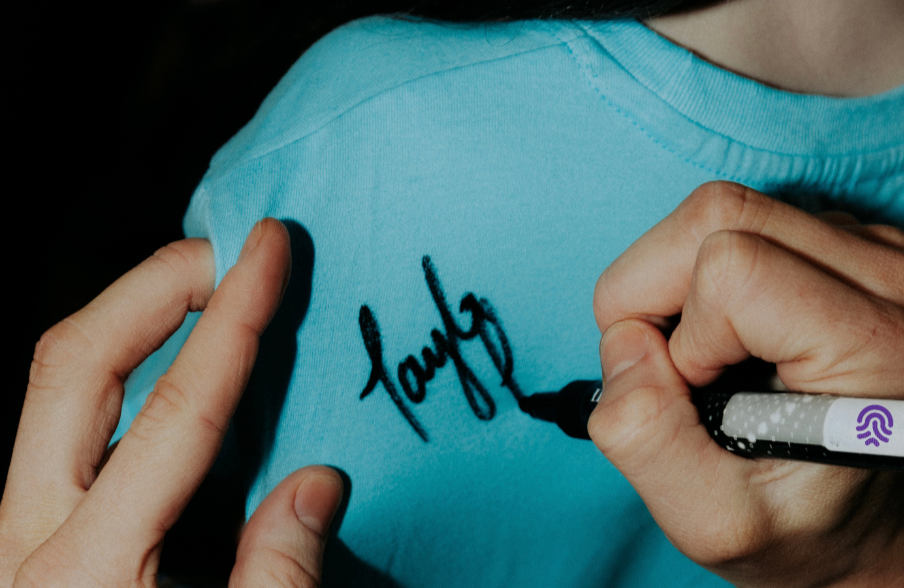
One example of how this can be used is for signed merchandise. The clever types at Iridia can take the ink out of a pen, add the data encoding DNA molecules and put it back in. Anything that is signed by that pen can be sampled and ‘read’. The data in the molecules can be compared to a database to ensure that the object is legit.
That’s just one use case, but the technology is applicable to anything. It means every inanimate object can be a data storage device. And if it can store data, it can store its origin story.
Iridia is already working with companies in the sports memorabilia and luxury whisky space among others as it hones its product. Iridia President and CEO, Murali Prahalad says “consumers, companies and governments all want to trust that the objects or materials they purchase are authentic and will perform as promised.
This is true regardless of whether its signed memorabilia, medicines or military hardware. For the first time in history, objects and materials can carry information in molecular form about themselves, their origins and chain of custody. We can now enable a verifiable world where legitimate celebrities, craftspeople and manufacturers can get rewarded for their hard work, and customers can have confidence in what they are buying.”
So while the burden of proof weighs heavily on many industries as they battle the counterfeiters, technology may be coming to the rescue in a way that could counter the counterfeiters for good.
Download this article as a PDF
*bbc.com/culture/article/20250311-rembrandt-to-picasso-five-ways-to-spot-a-fake-masterpiece
**vino-joy.com/2025/03/31/shanghai-police-bust-white-wine-counterfeit-ring-amid-rising-demand/
***theguardian.com/fashion/2022/may/10/spot-the-difference-the-invincible-business-of-counterfeit-goods